Camouflage: Nature’s Masterclass in Survival and Adaptation
Camouflage is one of the most fascinating survival strategies in the animal kingdom. From the tiniest insect that blends into a leaf to a great whale that vanishes in the blue depths of the ocean, camouflage allows animals to avoid detection, ambush prey, and even communicate in secret. For readers who love animal science and natural history, the study of camouflage opens a window into evolution, behavior, and innovative design inspired by nature. For more articles about animals and their behaviors visit zoopora.com and explore our full all animals collection.
What Is Camouflage?
At its core, camouflage is any trait that reduces an animal’s likelihood of being noticed by others. This includes color patterns that match the environment, body shapes that break up outlines, and behaviors that minimize motion or mimic inanimate objects. While color is the most obvious element, true camouflage is often a combination of color, pattern, texture, posture, and movement.
Major Types of Camouflage
Scientists identify several distinct strategies animals use to conceal themselves. Understanding these types clarifies how adaptive coloration works in different contexts.
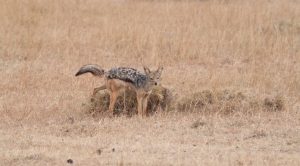
- Background matching where an animal’s coloration closely matches the general color and brightness of its habitat. Many desert lizards and ground nesting birds rely on background matching to blend into sand and soil.
- Disruptive coloration where bold patterns break up the outline of an animal so predators cannot easily detect a shape. Think of stripes and spots that confuse the eye.
- Counter shading where animals have darker upper surfaces and lighter undersides to counteract shading from sunlight, making them appear flatter and less three dimensional.
- Masquerade where an animal resembles an object that is of no interest to predators, such as a leaf, twig, or bird droppings.
- Mimicry where animals imitate other species or environmental features not only to hide but to deceive predators and prey.
Camouflage Across the Tree of Life
Camouflage is not limited to a few groups. It is distributed widely across insects, fish, birds, mammals, reptiles, and cephalopods, each group using techniques tailored to their sensory environment and lifestyle.
Insects provide classic examples. Stick insects and leaf insects literally mimic plant parts so well that predators often overlook them. Many moth species have wing patterns that resemble bark or lichen. Some caterpillars display false eyespots to startle predators. In aquatic environments, flounders use rapid color change to match the substrate while octopuses and cuttlefish use sophisticated skin textures and chromatophore control for instantaneous background matching and disruptive patterns.
Birds also exploit camouflage. Ground nesting species such as plovers and nightjars have mottled plumage that matches leaf litter. Young birds often have more cryptic plumage than adults to reduce detection before they can fly. Mammals like deer fawns and snowshoe hares rely on seasonal color change or natal spotting to blend with their surroundings during vulnerable stages of life. Reptiles such as chameleons have evolved color change for both camouflage and social signaling, although the visual communication function is often dominant.
Behavioral Components of Camouflage
Color and pattern are powerful but often insufficient without supporting behaviors. Animals may choose specific resting positions that enhance concealment, select backgrounds that match their appearance, or remain motionless when a predator is nearby. Some species adopt postures that align body markings with shadows and twigs. Others, like the cuttlefish, actively change texture by manipulating skin papillae to match the substrate.
Evolutionary Drivers and Genetic Basis
Camouflage evolves through natural selection. Individuals that match their environment more closely are less likely to be eaten and more likely to reproduce. Over many generations this process can produce highly specialized forms of concealment. Genetic studies show that coloration and patterning are often controlled by multiple genes interacting in complex ways. In some cases phenotypic plasticity allows individuals to adjust coloration during growth in response to habitat. This flexibility can be crucial in environments that change seasonally or where animals disperse across different habitats.
Camouflage and Predator Prey Dynamics
Camouflage shapes interactions between predators and prey. Ambush predators use concealment to approach prey without detection. Cryptic prey reduce encounter rates with predators. But the system is dynamic. Predators evolve better sensory abilities and search strategies to detect hidden prey. This coevolutionary arms race drives innovations such as motion detection tuned to specific prey signals, and the development of learning and search image formation by predators that improves their ability to spot camouflaged animals.
Human Applications and Biomimicry
Humans have long borrowed ideas from animal camouflage. Military and hunting apparel adopt patterns that break up shapes and match local environments. Architects and industrial designers use principles of color blending and texture matching to minimize visual impact of structures. In the realm of sustainable materials and green design, biomimicry inspired by camouflage contributes to products that reduce visibility and energy use while enhancing aesthetic harmony with nature. For readers interested in sustainable design and nature inspired innovation check out products and approaches promoted at Ecoglobalo.com, where principles inspired by natural systems are applied to modern environmental challenges.
Case Study: Cephalopods and Rapid Camouflage
Cephalopods such as octopus cuttlefish and squid represent apex camouflage artists. They use a combination of pigment cells called chromatophores reflective cells called iridophores and textured skin papillae to achieve instantaneous changes in color brightness and texture. Neural control allows these animals to react to visual cues with remarkable speed. Their capability demonstrates that camouflage can be both a reactive defense and an active communication tool. Scientists study cephalopods heavily for clues about rapid color change mechanisms that might inform new materials and adaptive surfaces.
Seasonal and Developmental Changes
Many species modify their camouflage across seasons or life stages. Arctic animals like the stoat and the arctic hare change from brown to white as snow covers the landscape. Juvenile animals often show more cryptic patterns than adults because they are less mobile and more vulnerable. These changes are controlled by hormonal cues triggered by day length temperature and other environmental signals which instruct the body to produce different pigments or molt into new plumage or pelage.
Research Methods and Technological Advances
Modern research on camouflage uses a blend of field observation experimental trials and digital modeling. Scientists use predator vision models to evaluate how well an animal blends into background from the perspective of birds mammals or fish. Advances in imaging and machine learning allow researchers to quantify pattern complexity and effectiveness across ecological conditions. These technological tools deepen our understanding of what makes camouflage effective for different animals in different environments.
Conservation Considerations
Habitat loss and climate change can degrade the effectiveness of evolved camouflage. For example if vegetation composition shifts dramatically animals that matched the former environment may become more visible to predators. Conservation strategies that preserve habitat heterogeneity can help maintain the camouflage advantages that species depend on. Understanding the interplay between appearance behavior and habitat can guide more effective management plans for vulnerable species.
Conclusion
Camouflage is a multifaceted adaptation that permeates the animal kingdom. It is a story of evolution innovation and continual change. From static background matching to complex rapid color change systems animals employ a rich toolkit to hide survive and hunt. As science advances we gain new insights into how these strategies work and how they can inspire human technologies and sustainable design. To continue exploring the natural world and its remarkable solutions visit our site and read more about animal adaptations and behaviors at zoopora.com.